
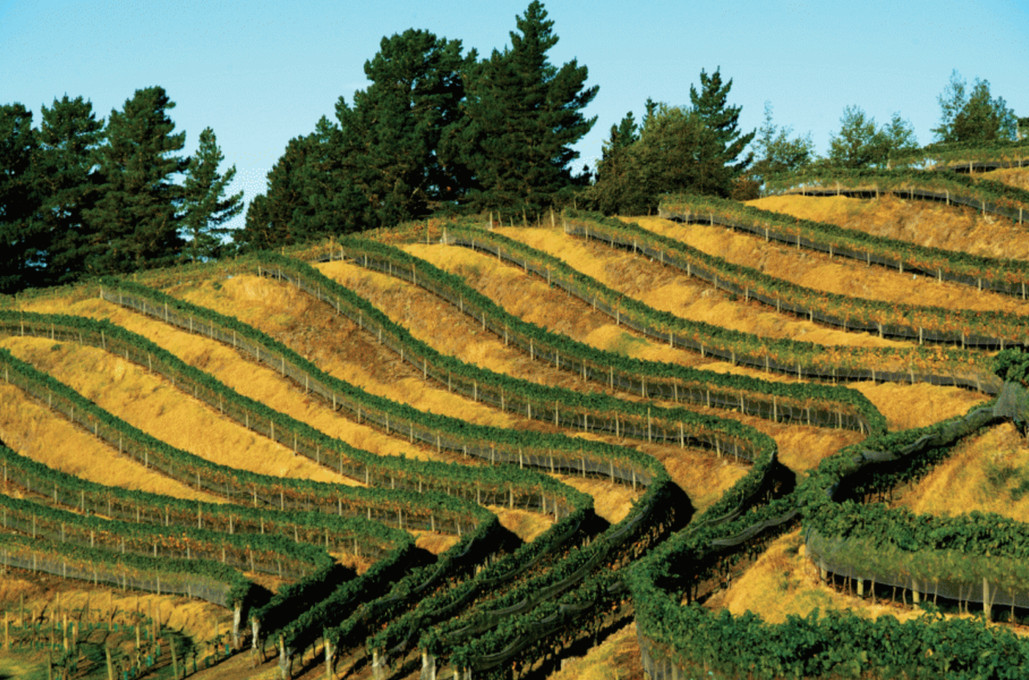
THE END OF ESK VALLEY’S HEIPIPI TERRACES.
Posted by Mark J, Brookshaw on 10th Aug 2026
The Vineyard That Came Back from the Pines
A story of abandonment, revival and one of Hawke’s Bay’s most singular expressions of place.
A small vineyard with a large reputation
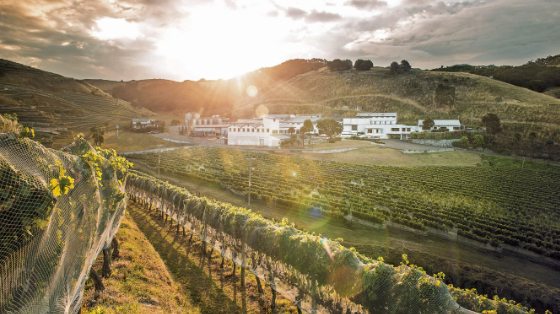 There are vineyards that matter because of their scale, and vineyards that matter because of what they reveal. Esk Valley’s Heipipi Terraces belongs firmly to the second group. At just one hectare, it is a small, steep, north-facing site above Bay View in Hawke’s Bay, yet it has become one of New Zealand wine’s most distinctive landmarks: a vineyard defined by its terraces, its difficult history and its ability to produce a red wine that speaks with unusual clarity of where it comes from.
The wine known as The Terraces is not simply a flagship bottling. It is the compressed story of an old winery, a changing market, a rescued hillside and a winemaking philosophy built around patience rather than force. To understand its reputation, it is necessary to begin decades before the first modern vintage was released.
From Glenvale to Esk Valley
The story begins in 1933, when Englishman Robert Bird established Glenvale Winery & Cellars at Bay View, north of Napier. Like many New Zealand wineries of its era, Glenvale built its early identity around fortified wines, particularly Port and Sherry styles. Fruit came from local growers as well as Bird’s own holdings, and the winery’s concrete fermenters became part of the site’s enduring character.
In the 1940s, Bird carved a steep series of terraces into the hillside above the winery and planted vines there. The aspect was promising, but the economics were punishing. Low yields and high production costs made the block commercially difficult, and the vineyard was eventually abandoned. In its place came pine trees, covering what would later become Esk Valley’s most celebrated piece of ground.
By the 1980s, New Zealand’s wine market was changing. Fortified wines were losing ground to table wines, and Glenvale’s old business model had become increasingly vulnerable. The Bird family had already begun producing small-scale varietal wines under the Esk Valley name, but the decisive shift came after Glenvale entered receivership and Sir George Fistonich of Villa Maria purchased the property in 1986. Esk Valley was repositioned as a boutique table wine producer, with its historic site and old equipment retained as part of its identity.
The revival of the terraces
In 1988, the decision was made to bring the old hillside vineyard back to life. The pine trees were felled, the terraces were reformed and, in 1989, the site was replanted. The chosen varieties—Malbec, Merlot, Cabernet Franc and Cabernet Sauvignon—reflected a Bordeaux-inspired ambition, but the vineyard itself would always shape the result more strongly than any template.
Heipipi is a demanding site. Its north-facing slope draws light and warmth, while its soils of limestone, volcanic ash, clay and shell deposits give the vineyard a layered geological identity. It is organically managed, dry-farmed and naturally low-yielding. The site’s small scale intensifies the sense that every vine matters, and every vintage is a close reading of a particular place rather than a recipe repeated by habit.
Heipipi: name, place and memory
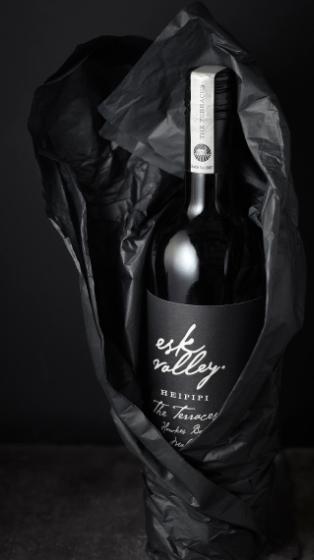 For many years the vineyard was known simply as The Terraces. Since the 2013 vintage, however, the name Heipipi has appeared on labels, recognising the te reo Māori name for the top of the hill above the vineyard. The name carries a deeper historical resonance: a pā, or hilltop fortress, once stood above the terraces, anchoring the site in a much longer human story than wine alone can tell.
That distinction matters. Heipipi refers to the vineyard and place; The Terraces is the flagship single-vineyard cuvée drawn from it; The Hillside is the second label from the same site. Together, they create a vocabulary for talking about the vineyard not only as a source of fruit, but as a landscape with layers of meaning.
Gordon Russell and the language of site
No account of The Terraces is complete without Gordon Russell. His working life became closely intertwined with Esk Valley’s modern identity. After joining Villa Maria as a cellar hand in 1988, Russell moved to Esk Valley in late 1989 as assistant winemaker, working under Kym Milne MW and Grant Edmonds. By 1992 he was responsible for The Terraces, and in 1993 he became head of winemaking.
Russell has often spoken of Heipipi as the pinnacle of Esk Valley’s work, a kind of natural amphitheatre whose old vines, low yields and exposure make it uniquely expressive. His approach has been to let the vineyard lead. Rather than polishing away its edges, the winemaking aims to preserve the character of the site: its density, savoury structure and sense of contained energy.
Winemaking without overstatement
The making of The Terraces is deliberately intimate. The fruit is hand harvested, sorted, destemmed and lightly crushed. Fermentation takes place in open-topped concrete fermenters, with hand plunging used to extract colour and tannin. These old fermenters are part of Esk Valley’s identity: practical, idiosyncratic and resistant to the kind of technical precision that can make wines feel overly managed.
After fermentation, the wine is matured in new and one-year-old French barrels, with the length of ageing adjusted to the vintage. The result is not intended to be a generic luxury red. Its purpose is more specific: to translate a singular piece of Hawke’s Bay into wine. In Russell’s phrase, tasting The Terraces means tasting the place.
Continuity through change
Esk Valley’s ownership story has continued to evolve. Villa Maria’s parent company entered receivership in 2021, and Indevin later announced its acquisition of Villa Maria Estates. Such changes matter in the commercial life of a winery, but they do not define the meaning of Heipipi. The vineyard’s deeper force lies in continuity: terraces cut into a hillside, abandoned to pines, then restored to vines and given the time to become expressive again.
That is why The Terraces continues to resonate. It is a wine built from a small place but a long memory, shaped by geology, history and human persistence. In Heipipi, Esk Valley has more than a vineyard. It has a reminder that the most compelling wine stories are rarely linear. They are cut, buried, rediscovered and patiently brought back into the light.
Following the 2023 release, it now appears likely that this iconic brand will cease to exist. This marks a significant moment, as the brand has long been recognised for its identity, legacy, and cultural impact. If this proves to be the end, the 2023 release may be remembered as its final contribution.