
Zoom the image with the mouse
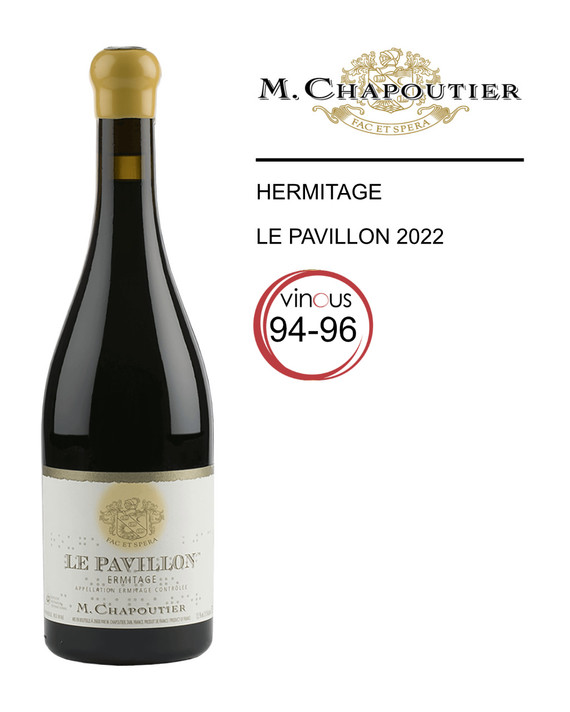
M. Chapoutier Hermitage Le Pavillon 2022.
Product Code:
CHLP22
Availability:
Price Is In-Bond, Duty And Vat Will Be Added On Delivery.
Country:
France / Rhone Valley.
Appellation:
Hermitage.
GRAPE VARIETIES:
100% Syrah.
RATINGS:
94-96 Vinous Points.
SIZE:
6 x 75 cl
£1,070.00
Crafted from vines planted on the east part of the lieu-dit Les Bessards on granite soils with some quartz, named granite de Tournon, the 2022 Ermitage Le Pavillon unwinds in the glass with aromas of flowers, dark cherries, ink and lilac mingled with carnal/animal-like notes. Medium to full-bodied, dense and structured, it's firm and rich with stringy tannins and a rustic, almost dry finish.
During my visit to Maison Chapoutier, Maxime Chapoutier eagerly showed me around his various plots on the Hermitage hillside, a tour I thoroughly enjoyed. It’s worth noting that this estate boasts one of the finest vineyard heritages on the Hermitage hill and was among the first to adopt biodynamic viticulture practices. The house is known for its dense, woody and often highly structured wines, but under Maxime’s influence, it is shifting toward the production of more delicate and elegant wines while retaining its fundamental characteristics. Despite being a proponent of “whole bunch” winemaking, Maxime is scrutinizing this method more critically now, as global warming is increasing pH levels and alcohol. Unfortunately, many of the 2022 reds lacked precision, with firm and sometimes dry structures that suggested potential microbiological concerns. The 2023s whites are perfumed and dense with bright acids in a somewhat fleshier, more extroverted style than in the past.
Yohan Castaing, The Wine Advocate, Published: Mar 13, 2025.
Crafted from vines planted on the east part of the lieu-dit Les Bessards on granite soils with some quartz, named granite de Tournon, the 2022 Ermitage Le Pavillon unwinds in the glass with aromas of flowers, dark cherries, ink and lilac mingled with carnal/animal-like notes. Medium to full-bodied, dense and structured, it's firm and rich with stringy tannins and a rustic, almost dry finish.
During my visit to Maison Chapoutier, Maxime Chapoutier eagerly showed me around his various plots on the Hermitage hillside, a tour I thoroughly enjoyed. It’s worth noting that this estate boasts one of the finest vineyard heritages on the Hermitage hill and was among the first to adopt biodynamic viticulture practices. The house is known for its dense, woody and often highly structured wines, but under Maxime’s influence, it is shifting toward the production of more delicate and elegant wines while retaining its fundamental characteristics. Despite being a proponent of “whole bunch” winemaking, Maxime is scrutinizing this method more critically now, as global warming is increasing pH levels and alcohol. Unfortunately, many of the 2022 reds lacked precision, with firm and sometimes dry structures that suggested potential microbiological concerns. The 2023s whites are perfumed and dense with bright acids in a somewhat fleshier, more extroverted style than in the past.
Yohan Castaing, The Wine Advocate, Published: Mar 13, 2025.
All our wines are stored in our importers bonded warehouse, which have the optimum environment for fine wine storage, by carefully regulating temperature, humidity and other microclimatic factors.
As such, please allow between 7 and 10 days for your delivery to arrive.
+