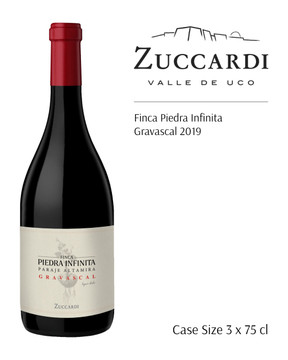


Originating from a selection of parcels planted in alluvial, sandy, granite soils with calcareous content, the 2021 Finca Piedra Infinita was vinified in concrete with whole clusters and aged for 12 months. It opens with a commanding, complex and ceaselessly evolving nose initially dominated by dusty, savory, spice-driven aromas, then blossoming with the classic purple flower notes characteristic of Paraje Altamira. The palate perfectly balances a seductive, sumptuous texture with remarkable richness and discernible finesse, culminating in a quietly explosive, long, intensely vibrant finish. This wine showed exceptional dynamism in the glass, constantly melding luscious black fruits, refined minerality and immaculately polished tannins in a punchy yet weightless, all-encompassing and captivating package. It is a simply magnificent example of contemporary Argentine Malbec.
Within the tremendous scope of Argentine wine, there is perhaps no more impressive or complete transformation than that of Zuccardi. Its story has unfolded across three generations: its founding in 1963 by Alberto "Tito" Zuccardi, who used vineyards as demonstration vessels for a proprietary irrigation system; its rise to global distribution led by José Zuccardi; and its current phase under Sebastián Zuccardi, who joined the family business in 1999. His relentless vision centering around purity and place, along with his wholesale commitment to investing in the Uco Valley, has propelled Zuccardi into the upper echelon of producers in South America.
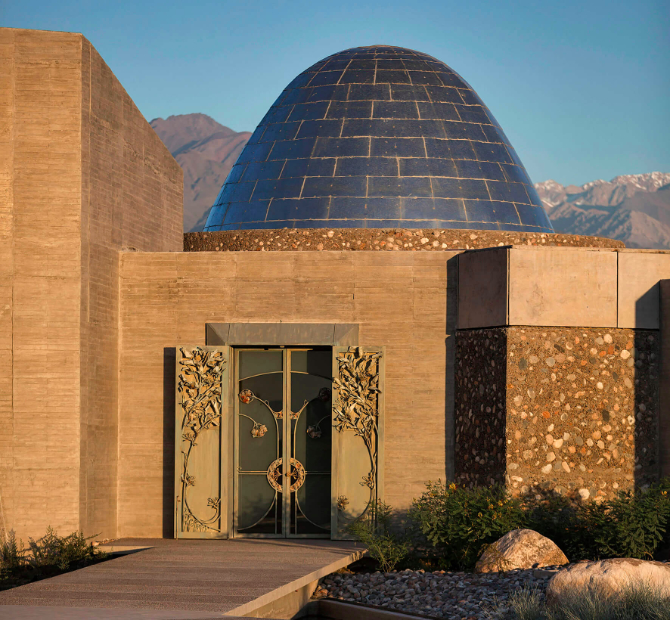
Sebastián's studies focused on viticulture rather than winemaking, a background that continually influences his viewpoint and defines the transparent aesthetic of the wines. Initially drawn to the Uco Valley in search of a climate suitable for producing sparkling wine, Zuccardi currently owns 350 hectares of vines in the region, primarily concentrated in Paraje Altamira, San Pablo and Gualtallary and overseen by viticulturist Martín di Stefano. Each vineyard site has been meticulously mapped and planned according to soil type, typically featuring a combination of alluvial soils with calcium carbonate content. The overarching vision at Zuccardi centers on representing place, which can easily sound like a series of buzzwords, but at Zuccardi, it becomes palpably evident throughout every aspect of the operation, from the design of the winery and the materials of the fermenters to the layout of the vineyards and the crystalline clarity of the wines themselves.
Alongside Sebastián, production is overseen by Head Winemaker Laura Principiano. The cellar concentrates on fermentations in concrete vats, where a labyrinth of vessels was crafted from stones excavated while planting their Uco Valley vineyards. Red wines typically do not undergo cold soaking, and macerations occur over 12 to 15 days. Whole-cluster fermentation varies by vineyard site, with San Pablo often destemmed entirely, Gualtallary typically seeing a healthy amount and Altamira usually fermented entirely whole cluster. White wines are typically not racked and do not undergo malolactic conversion. Sémillon is vinified in foudre, a notable exception to the focus on concrete, as the team strives to encourage oxygen exposure during fermentation and élevage.
The portfolio is organized in a hierarchical pyramid, structured similarly to the Burgundian cru system: the Serie A and Q lines are introductory, regional labels focusing on clean, concise expressions of their respective varieties; Polígonos is a corollary to village bottlings representing a specific section of the Uco Valley; wines such as Concreto, José, Tito and Emma Zuccardi fall under the Viticulturist line, which pays homage to family members and historic wine styles; the Paraje range includes Fósil, Botánico and the Aluvional series, each representing a specific subregion defined by soil and climate; the Finca range offers a stunning selection of single-vineyard wines, with the single-parcel bottlings of Piedra Infinita occupying the apex of the range.
Regardless of price point, the unifying factor throughout the roster is unwavering clarity, focus and precision. The dramatic shift away from the heavier, oakier and glossy style that defined many Argentine wines in the 1990s and 2000s is nowhere to be found. In the words of Sebastián, "Before, the wines of Argentina were the muscles; now they are the bones." I believe it is safe to say that Zuccardi's vision, transformation and success have had quite a bit to do with that in recent years.
Reviewed by Matthew Luczy, 1st May 2025, The Wine Advocate.
Originating from a selection of parcels planted in alluvial, sandy, granite soils with calcareous content, the 2021 Finca Piedra Infinita was vinified in concrete with whole clusters and aged for 12 months. It opens with a commanding, complex and ceaselessly evolving nose initially dominated by dusty, savory, spice-driven aromas, then blossoming with the classic purple flower notes characteristic of Paraje Altamira. The palate perfectly balances a seductive, sumptuous texture with remarkable richness and discernible finesse, culminating in a quietly explosive, long, intensely vibrant finish. This wine showed exceptional dynamism in the glass, constantly melding luscious black fruits, refined minerality and immaculately polished tannins in a punchy yet weightless, all-encompassing and captivating package. It is a simply magnificent example of contemporary Argentine Malbec.
Within the tremendous scope of Argentine wine, there is perhaps no more impressive or complete transformation than that of Zuccardi. Its story has unfolded across three generations: its founding in 1963 by Alberto "Tito" Zuccardi, who used vineyards as demonstration vessels for a proprietary irrigation system; its rise to global distribution led by José Zuccardi; and its current phase under Sebastián Zuccardi, who joined the family business in 1999. His relentless vision centering around purity and place, along with his wholesale commitment to investing in the Uco Valley, has propelled Zuccardi into the upper echelon of producers in South America.
Sebastián's studies focused on viticulture rather than winemaking, a background that continually influences his viewpoint and defines the transparent aesthetic of the wines. Initially drawn to the Uco Valley in search of a climate suitable for producing sparkling wine, Zuccardi currently owns 350 hectares of vines in the region, primarily concentrated in Paraje Altamira, San Pablo and Gualtallary and overseen by viticulturist Martín di Stefano. Each vineyard site has been meticulously mapped and planned according to soil type, typically featuring a combination of alluvial soils with calcium carbonate content. The overarching vision at Zuccardi centers on representing place, which can easily sound like a series of buzzwords, but at Zuccardi, it becomes palpably evident throughout every aspect of the operation, from the design of the winery and the materials of the fermenters to the layout of the vineyards and the crystalline clarity of the wines themselves.
Alongside Sebastián, production is overseen by Head Winemaker Laura Principiano. The cellar concentrates on fermentations in concrete vats, where a labyrinth of vessels was crafted from stones excavated while planting their Uco Valley vineyards. Red wines typically do not undergo cold soaking, and macerations occur over 12 to 15 days. Whole-cluster fermentation varies by vineyard site, with San Pablo often destemmed entirely, Gualtallary typically seeing a healthy amount and Altamira usually fermented entirely whole cluster. White wines are typically not racked and do not undergo malolactic conversion. Sémillon is vinified in foudre, a notable exception to the focus on concrete, as the team strives to encourage oxygen exposure during fermentation and élevage.
The portfolio is organized in a hierarchical pyramid, structured similarly to the Burgundian cru system: the Serie A and Q lines are introductory, regional labels focusing on clean, concise expressions of their respective varieties; Polígonos is a corollary to village bottlings representing a specific section of the Uco Valley; wines such as Concreto, José, Tito and Emma Zuccardi fall under the Viticulturist line, which pays homage to family members and historic wine styles; the Paraje range includes Fósil, Botánico and the Aluvional series, each representing a specific subregion defined by soil and climate; the Finca range offers a stunning selection of single-vineyard wines, with the single-parcel bottlings of Piedra Infinita occupying the apex of the range.
Regardless of price point, the unifying factor throughout the roster is unwavering clarity, focus and precision. The dramatic shift away from the heavier, oakier and glossy style that defined many Argentine wines in the 1990s and 2000s is nowhere to be found. In the words of Sebastián, "Before, the wines of Argentina were the muscles; now they are the bones." I believe it is safe to say that Zuccardi's vision, transformation and success have had quite a bit to do with that in recent years.
Reviewed by Matthew Luczy, 1st May 2025, The Wine Advocate.